The Black Lion Inn
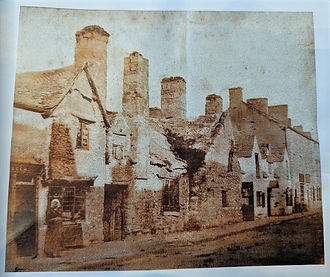
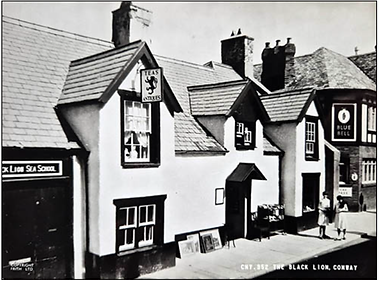
The Black Lion is one of Conwy's most distinctive historic buildings, and one that has witnessed almost six centuries of the town's history. Most people notice the date 1589 carved above the doorway and assume this marks when the house was built. In fact, the building is much older!
Around 2010, a roof timber was analysed on behalf of the Royal Commission on the Ancient and Historical Monuments of Wales. The results showed that the tree was felled in 1441 - 42, placing the earliest part of the house firmly in the fifteenth century. That makes the Black Lion one of the oldest surviving domestic buildings in Conwy, second only to nearby Aberconwy House.
The house was built during the rebuilding of Conwy following the damage caused by Owain Glyndŵr's uprising. Archaeological evidence suggests it began life as a two-bay medieval hall house before being substantially altered in 1589. The date above the door therefore records a major remodelling rather than the original construction of the building.
The initials JB and E carved alongside the date belong to John Brickdall, Vicar of Conwy, and his wife. Whether the house served as the vicarage or as Brickdall's private residence remains uncertain, but it stayed in the family's hands for many years and was known as Brickdall House until the late nineteenth century. The Brickdalls were one of Conwy's leading families, with connections to the governance of Conwy Castle and the town itself.
By the eighteenth century the building had taken on a new role as the Black Lion Inn, welcoming travellers arriving by horse-drawn coach.
In 1796, William Evans was the 'innholder'.
It remained an inn for over 200 years and even hosted Conwy's weekly Monday morning pig market in the yard behind the building.
Like many of Conwy's oldest buildings, the Black Lion has accumulated its fair share of stories. There is a well in the yard, stone steps leading directly onto the town walls, and long-standing tales of a secret tunnel linking the cellar to the quay.
After the inn closed in 1935, the building adapted once again, becoming a sweet shop, tea rooms, and later an antiques business. By the end of the twentieth century it had fallen into a poor state of repair, but restoration work eventually secured its future. The distinctive metal jackdaws on the roof were added during this work - a fitting tribute to Conwy's nickname, as anyone born within the town walls is traditionally known as a "Jackdaw".
Today, the Black Lion remains an intriguing historical building. It isn't simply important because of its age. Its changing appearance and uses reflect the wider story of the town itself, from medieval rebuilding and Tudor prosperity to coaching inns, Victorian commerce, and modern conservation.
Few buildings in Conwy tell so many stories under one roof!